Eyelid Surgery (Blepharoplasty) Recovery: When Can You Wear Contact Lenses, Makeup & Return to Work?

- Wait at least 10 to 14 days after upper or lower blepharoplasty before inserting contact lenses so that pulling on the eyelid does not disrupt delicate internal or external healing tissues.
- Prescription eyeglasses can be worn immediately after surgery, and most patients return to desk work and video calls within 7 to 10 days.
- Upper blepharoplasty can often be performed comfortably under local anesthesia in-office, whereas combined upper/lower transconjunctival fat repositioning is typically performed under gentle sedation.
Upper and lower blepharoplasty (eyelid surgery) consistently ranks among the highest-satisfaction procedures in facial plastic surgery because rested, bright eyes transform the entire expression with remarkably brief downtime. However, patients in our Fairfax clinic frequently ask practical daily-life questions before scheduling: When can I go back to wearing contact lenses? When is eye makeup safe? And what drives the cost of upper vs. lower eyelid surgery?
When Can You Wear Contact Lenses After Eyelid Surgery?
If you wear soft or rigid gas-permeable contact lenses, you should plan to wear eyeglasses exclusively for the first 10 to 14 days following blepharoplasty. There are two important anatomical reasons for this rule:
- Mechanical Incision Protection: Inserting or removing a contact lens requires pulling the upper or lower eyelid margin taut. During the first two weeks, this traction can place stress on fine upper-crease sutures or the hidden internal transconjunctival incision inside the lower lid.
- Tear Film & Corneal Hydration: Temporary mild swelling around the eyelids slightly alters blink mechanics during week one. Wearing glasses while using preservative-free lubricating eye drops keeps the cornea comfortably hydrated until your natural blink reflex is 100% restored.
Day-by-Day Blepharoplasty Recovery Milestones
- Days 1–3 (Cool Compresses & Elevation): Tightness and mild swelling peak at 48 hours. Gentle chilled compresses and sleeping with your head elevated keep bruising minimal. Eyeglasses and light reading or TV are fine as tolerated.
- Days 5–7 (Suture Removal): For upper blepharoplasty, hair-thin sutures hidden in the natural tarsal crease are painlessly removed in our Fairfax office. Lower transconjunctival blepharoplasty uses self-dissolving internal closures or requires no external skin sutures at all.
- Days 10–14 (Contacts & Camouflage Makeup): Once Dr. Kim confirms complete epithelial sealing at your follow-up check, you may resume wearing clean contact lenses, applying fresh hypoallergenic eye makeup, and returning to light low-impact cardio.
What Determines Eyelid Surgery Cost in Northern Virginia?
Blepharoplasty pricing in Fairfax and Washington, DC depends primarily on whether you are addressing the upper eyelids alone, the lower eyelids alone, or a comprehensive 4-lid rejuvenation:
- Upper Blepharoplasty: Removing redundant hooded skin and sculpting a crisp upper lid crease can often be performed under comfortable local anesthesia, minimizing facility and anesthesia fees.
- Lower Transconjunctival Blepharoplasty with Fat Repositioning: Correcting under-eye bags while preserving and draping orbital fat into the hollow tear trough is a high-precision microsurgical procedure typically performed under sedation for complete patient comfort.
Frequently Asked Clinical Questions
Can I work on my computer during the first week after eyelid surgery?
Yes, in moderation. We recommend following the 20-20-20 rule (every 20 minutes, look 20 feet away for 20 seconds) and applying preservative-free artificial tears frequently, since screen use naturally reduces your blink rate.
Will lower eyelid surgery change the shape of my eyes?
No. By using a hidden transconjunctival approach inside the lower lid and preserving the orbicularis oculi muscle, Dr. Kim eliminates under-eye puffiness without pulling down the lower lid margin.
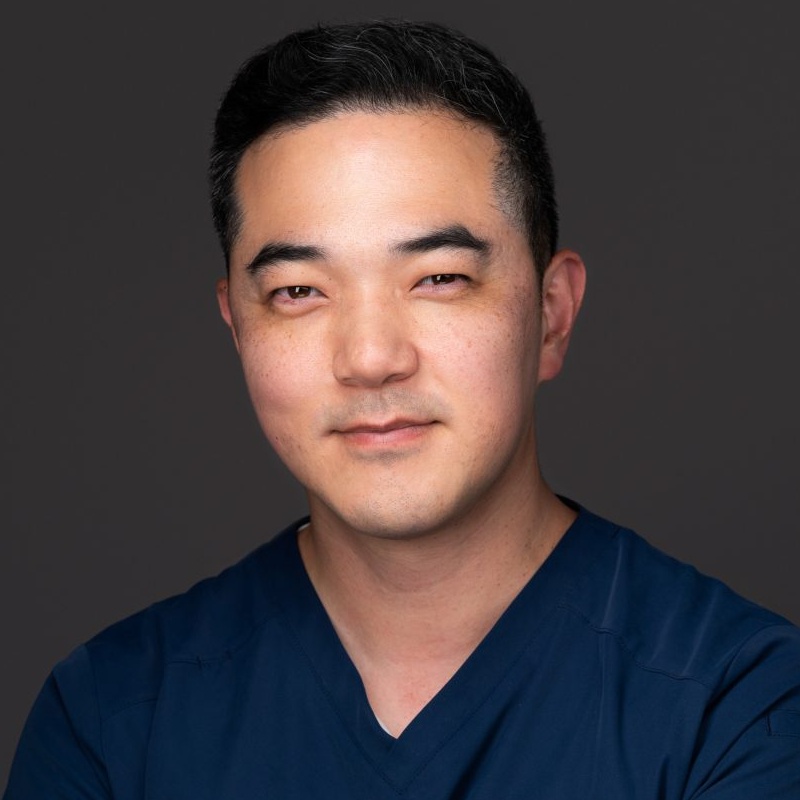
Dr. Jae Kim, MD
Dr. Jae Kim is double board-certified in Facial Plastic & Reconstructive Surgery and Otolaryngology–Head & Neck Surgery. Educated at Harvard University and fellowship-trained in advanced facial plastic surgery, he specializes exclusively in surgery of the face, head, and neck alongside the YAB Aesthetics clinical team in Fairfax, Virginia.