Upper & Lower Blepharoplasty: Why Fat Repositioning Prevents the 'Hollowed Eye' Look

- Modern upper blepharoplasty removes redundant skin while conserving central orbital fullness so the upper sulcus never looks skeletal or sunken.
- Lower blepharoplasty via a hidden transconjunctival (inside-the-eyelid) approach leaves zero external skin scar and protects lower lid support.
- Repositioning herniated orbital fat across the tear trough ligament smooths both the 'bag' and the dark hollow beneath it in a single step.
The periorbital region is the focal point of human expression—and often the very first area to show fatigue, hooding, or puffiness. Yet many patients hesitate to pursue eyelid rejuvenation because they have seen older surgical results where too much tissue was removed, leaving the eyes looking hollow or startled.
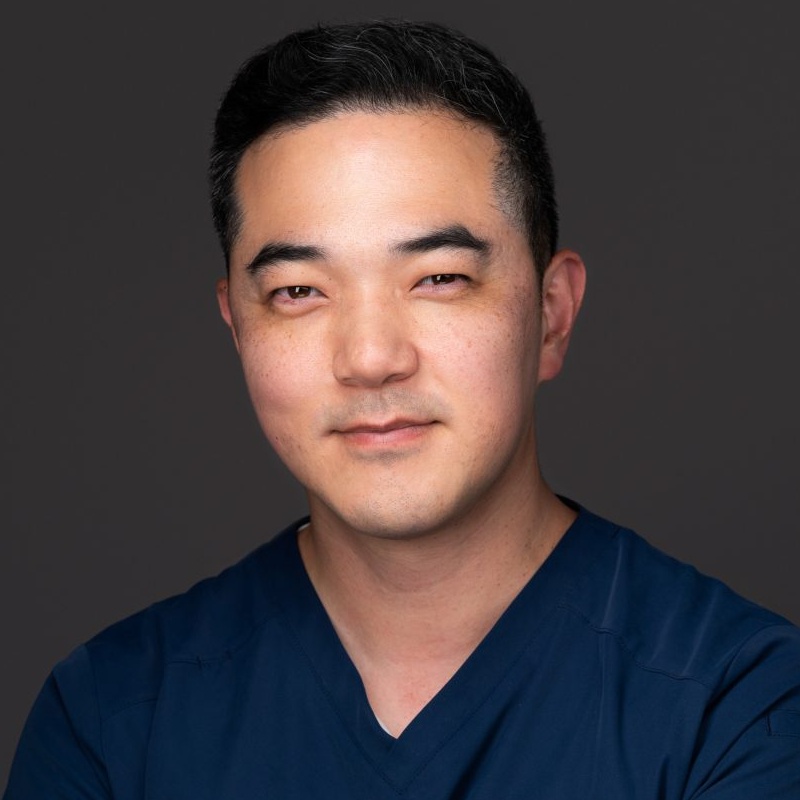
Modern periorbital surgery with Dr. Jae Kim focuses on volume conservation and structural blending across the lid-cheek junction.
Conservative Upper Eyelid Refinement
In upper blepharoplasty, the goal is to clear heavy skin resting on the eyelashes while preserving the youthful fullness of the upper orbit. Dr. Kim hides the micro-incision precisely within the natural tarsal crease and tailors muscle and fat adjustments conservatively—or performs specialized Asian Double Eyelid (Supratarsal Crease) Surgery that creates a natural, dynamic fold harmonious with the medial epicanthus.
Transconjunctival Lower Blepharoplasty & Fat Transposition
Under-eye bags are caused by orbital fat pushing forward above a tightly tethered tear trough ligament. Simply cutting all of that fat out can leave a sunken shadow under the eye a few years later.
- Scarless Access: Working through a tiny hidden incision inside the lower eyelid (transconjunctival approach), Dr. Kim avoids cutting the orbicularis oculi muscle that supports lower lid posture.
- Fat Repositioning: Instead of discarding the herniated fat pads, Dr. Kim releases the tear trough ligament and drapes the living fat smoothly into the hollow beneath the eye—transforming a double-convex shadow into a single, seamless lid-cheek transition.
- Fractional CO2 or Pinch Tightening: If mild surface crepiness exists, a micro-skin pinch or CoolPeel® CO2 laser resurfacing polishes the delicate lower eyelid skin without downward traction.
Frequently Asked Clinical Questions
Can upper blepharoplasty be performed without general anesthesia?
Yes. Isolated upper eyelid surgery is frequently performed comfortably in our accredited Fairfax suite under local anesthesia with light oral sedation, with a 7-day suture removal timeline.
When should a brow lift be combined with upper blepharoplasty?
If lateral hooding is caused by descent of the tail of the eyebrow rather than excess eyelid skin alone, combining a Temporal or Endoscopic Brow Lift prevents pulling the brow downward and opens the outer eye naturally.
Dr. Jae Kim, MD
Dr. Jae Kim is double board-certified in Facial Plastic & Reconstructive Surgery and Otolaryngology–Head & Neck Surgery. Educated at Harvard University and fellowship-trained in advanced facial plastic surgery, he specializes exclusively in surgery of the face, head, and neck alongside the YAB Aesthetics clinical team in Fairfax, Virginia.